A Morning Walk with a Camera
A gentle practice for noticing light, edges and ordinary scenes before the day gets busy.
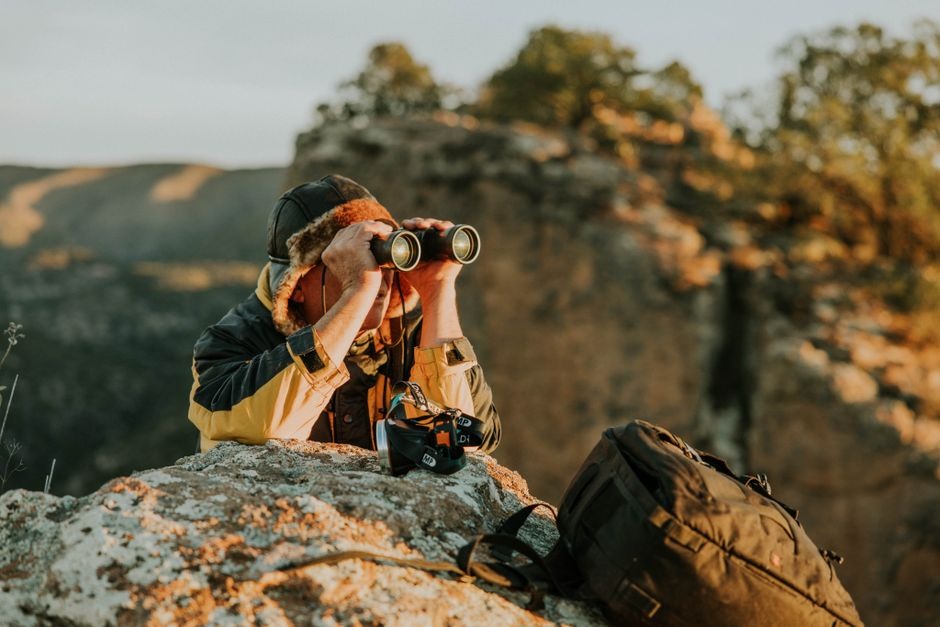
The best camera walk begins before you decide what you are looking for. Leave the house with one lens, one small bag, and enough time to take the long way around the block. If you carry binoculars too, use them for a minute before photographing anything; looking without composing can sharpen your attention. The point is not to return with a masterpiece. It is to become available to what is already there.
Start with the edges of things
Morning light makes ordinary boundaries visible: the rim of a cup in a café window, a fence throwing a narrow shadow, a row of roof tiles against a pale sky. Instead of hunting for subjects, watch where one surface meets another. Those small transitions often make stronger photographs than a grand view.
Walk slowly enough to notice repetition. Three bicycles leaning at the same angle, a sequence of windows, or the same warm color appearing in a sign and a doorway can give a frame its internal rhythm.
Carry fewer choices
A single focal length is a useful constraint. You learn where your feet need to be, and the camera becomes less of a menu. If the light is flat, look for shape and gesture. If it is bright, notice the geometry of shadow. If nothing seems to happen, stay in one place for five minutes and let the scene change around you.
Good photographs often arrive after the obvious picture has already passed.
At home, make a small edit rather than a large one. Choose three frames that feel connected and write one sentence about what you noticed. Over time, the notes become a map of attention — a record not only of where you walked, but of how you learned to see.